Be yourself; Everyone else is already taken.
— Oscar Wilde.
This is the first post on my new blog. I’m just getting this new blog going, so stay tuned for more. Subscribe below to get notified when I post new updates.
Be yourself; Everyone else is already taken.
— Oscar Wilde.
This is the first post on my new blog. I’m just getting this new blog going, so stay tuned for more. Subscribe below to get notified when I post new updates.
Have you ever thought about the way you see parts of the world before this class? Today, I challenge you to think about how the single story affects the way you see the world, how religion puts barriers on other countries, and how women’s rights differ all around the world. This will allow you to form your own opinion instead of listening to someone else’s. Even though different parts of the world have many different circumstances than we are used to, you will be able to see how we all share a common interest; and that is to be valued.
People are often told information, no matter the content, and they believe it without question. Why is that? It’s because we have been conditioned to believe the information accessible to us. This mindset is what sets apart a story from the truth. We often hear stories about people’s lives in other countries and we take those stories to be facts. We don’t think about where these stories come from, or who is writing them; we just know to process the information and believe it without question or research. Most often, we do this because it is easier than working and searching for the truth. The most interesting stories grab our attention, and these stories are normally about catastrophic situations. For example, the 2010 photo of the year that told the story of why Bibi Aisha left her abusive husband and household in Afghanistan (Mengiste). People experience single stories and their effects everyday, including myself. Instead of coming to conclusions that everybody has the same experience in a country based off of one story, we could travel to those countries to see for ourselves and form our own opinions. After we form an opinion on the single story, we then create stereotypes. However, these stereotypes can be changed with a lot of effort, over a long period of time. A common stereotype Americans have formed through a single story is equating Mexicans with immigrants as discussed in Adiche’s TED Talk. Now that we know what effects a single story can have on us, I hope we continue to seek more information rather than taking a story as it is.
Living in a country that has freedom of religion, I did not realize how it shapes the laws in other countries like Nigeria that we read about in “Under the Udala Trees” by Chinelo Okparanta. I was unaware that people are still being stoned, or even killed for being gay. We assume that most of America’s laws and regulations must be evolving in other countries, and that is not the case. As we experienced while reading the novel, people are still being punished for loving people of the same gender. In the past decade, Nigeria passed “The Same-Sex Marriage Prohibition Act [that] criminalises all forms of same-sex unions and same-sex marriage throughout the country.(2006, 2011)”. Religion is the basis of the government in some countries, and it can be very dangerous for people who don’t strictly follow it. However, in the United States people may not be killed for being a part of the LGBTQ community, they still feel shame because of people’s opinions about them. In “Under the Udala Trees” we experience Ijeoma having to sit through Bible studies with her mother because she considers her love for Amina to be an abomination, as the Bible states. She also tells a story about a father giving up his virgin daughter in order to keep two men from lying together. This situation may sound ridiculous to us; however, this happens more than we think. A woman’s purpose in many other countries is to get married at a young age, so they can have as many children as possible. However, male children are more valuable because they continue the family name. In most countries, males still have more rights than females.
Women’s rights in other countries are significantly different than they are in the United States. As stated in “Radical Women, Embracing Tradition” by Kavita Ramdas, tradition can define rules for both women and men. Women’s education is less of a priority than men’s in many countries because women are expected to stay home, have children, clean, and cook. One of the most challenging things to change is a tradition. Some women are still not allowed to work, and if they are it’s in very dangerous conditions, such as sweatshops. While some countries have and have had women leaders, such as Dalia Grybauskaitė who was the president of Lithuania from 2009-2019, The United states has yet to elect a woman as President. Some women, at an early age, are forced into marriage and don’t have a say in who they are marrying because their parents pick their spouse. As Americans, we might consider driving, going to school, and voting all basic rights; however, in other countries women don’t get to experience any of these. In India, “750,000 female children are killed a year” because male children are considered more valuable (The World Before Her). Female children who are beaten by their fathers are conditioned to think it’s acceptable because their fathers have allowed them to live, as shown in “The World Before Her.” There are a lot of divisions between men and women globally. However, people are constantly challenging these perceptions and trying to change the way people see males and females.
Women are considered to have more power in the United States, than other countries, but there is still an obvious gender equality gap. The United States has never elected a female president, does America still have an issue with women being in power? In 2018, Saudi Arabian women were granted the right to drive, however, women still need male consent to make everyday decisions. Do you see women in countries like Saudi Arabia getting more or less rights in the future? If so, then when and how? As the question about immigration in America continues to be an issue, how do you think this affects women trying to escape abuse situations that are common in their countries? As Americans, we tend to focus on the tragedies in these other countries but continue to limit their ability to escape. Do you think as Americans we should help these women, or just continue to talk about it?

I chose this picture because I had no idea women stack these coils in order to lengthen their neck. They alter their bodies just because it is considered a way to attract men. They first start wearing them to make their necks look longer; however, over time they begin to add more coils to actually alter the length of their neck. This eventually makes their neck longer and pushes their shoulders down. I can’t believe I have never seen or heard about this before. This is another example of how different standards for women are all around the world.
I attended Sinesia Karol’s presentation of how she became a very successful businesswoman in the fashion industry on February 18, in Congdon School of Health Sciences in the Callicut auditorium. Sinesia Karol is an entrepreneur of swimwear and she was born in Vitoria, Brazil. She is the founder and creative director of her company. When she first started the launch of her swimwear line, she did not have a business plan. This led her to have many headaches and complications throughout her launch. She recommended that if you are going to start a company, to be sure to have a business plan, because it will only help you in the long run. She didn’t have the luxury of taking business classes as many of us have at High Point University. Another useful tip she gave us was to find people who can help you and create strong relationships with them. She was able to visit High Point University in February because this is a time when her company is receiving orders.
She launched the SINESIA KAROL Swimsuit Line in New York City in 2012. Her first buyer was BERGDORF GOODMAN, who happened to come to her first showing of the swimsuit line. Then, she began doing trunk shows. Even though she created this swimsuit line and ended up being very successful, at the beginning she had no idea that you must deliver the orders on a specific date and no later. However, she has her own manufacturing plant, so she makes sure all orders get delivered by their specific date. After doing trunk shows, she began doing trade shows, which is where you sell your products. You have to make sure they are the right fit, you have the right customers, enough demand, you are fitting the budget, sales will cover the cost, and you have to make sure you follow up with any customers who buy the products.
She began creating swim collections, which turned into her idea of having a fashion show. She had to hire people in textiles and production. Next, she had to go through with the process of choosing models, of which she had 200 applicants and she had to pick 22. These models could be from all over the United States, meaning she had to pick women from all over the country to wear her products. Her brand proposition is to be “one-of-a-kind” because they cost two hundred dollars and above. Although fashion shows are expensive, they are a free marketing tool and allows potential buyers to see her collections. She then gave more advice and said: “Know what you want and know what you do NOT want.” This advice has helped her throughout her career with her business because she knew that she didn’t want to be trendy, but she wanted to be unique. Being unique is a struggle for women all across the globe. She had a lot of confidence in herself and her products, and it really paid off.
She has a flagship store in Bahia, Trancoso, Brazil which was opened in 2016. This store is located in the center of Brazil and is a target for travelers, meaning that it is free marketing and brings an international crowd. This made me think of our class and how her products bring women from all around the world. Her products can allow women to create relationships by meeting in a store or even talking to each other through social media about their love for her products. This could strike a conversation that leads to a friendship. Her swimwear line is sustainable and eco-friendly. They also use left-over material to create other bathing suits. She mentioned wanted to expand her line to include shoes, bags, hats, and sunglasses. Her products were featured in Sports Illustrated and all of the swimsuits were $360; she is also an official sponsor of Miss USA 2019. She stated she has been so successful because she is “determined, passionate, and works hard.”
The fact that Sinesia Karol was from Brazil really caught my attention because she came from another country and still managed to be very successful once she moved to the United States. Obviously, she moved here under different circumstances than most of the women we talk about in our class, but it’s still very impressive that she traveled here from another country and made this massive impact on the United States fashion industry. Her mother used to handmake all of their clothes, which is how her interest in fashion began. It also really caught my attention that she was the official sponsor of Miss USA 2019 and her bathing suits were featured in Sports Illustrated. Miss USA is a great accomplishment because it only includes women who may potentially go on to compete in Miss Universe. The Sports Illustrated cover included three very powerful women, including Simon Biles. Simon Biles has made a major impact on how many women view their bodies. Sinesia Karol is a role model for women around the globe. She made something of herself because she works hard, is determined, and passionate.
Her products are sold both in Brazil and in the United States. She had to learn the differences in styles between the two countries. She recently had a buyer from Greece, where she will be selling products within the next two years. She told us her goal was to sell her products in as many places as possible. She wants to go global. Along with going global, she has to learn the styles in the other countries and design based off of that. Sinesia Karol has made a name for herself and a reputation for her products, that many people dream of. It was very interesting to hear about how her travel to the United States helped in her success story.
https://www.globalcitizen.org/en/content/9-key-issues-affecting-girls-and-women-around-the/
I was interested to see the key issues affecting girls and women around the world. I found this list and child marriage really caught my attention. The website states, “An estimated 140 million girls will become child brides between 2011 and 2020 . Girls who marry before age 18 are typically denied an education, at risk of complications related to premature childbearing, and more vulnerable to intimate partner violence.” This is an extremely large number of children who are forced to become wives as children. Along with being forced into marriage, they increase their rate of abuse and birth complications.
“A growing number of governments around the world are considering whether to grant legal recognition to same-sex marriages. So far, 30 countries and territories have enacted national laws allowing gays and lesbians to marry, mostly in Europe and the Americas. In Mexico, some jurisdictions allow same-sex couples to wed, while others do not.”
https://www.pewforum.org/fact-sheet/gay-marriage-around-the-world/
I think it is very important to understand there are still a lot of countries who have not legalized same-sex marriage. Only 30 out of 195 countries that have legalized same-sex marriage. That is an outrageously low number considering the amount of people who have to struggle with who they love on a daily basis, with a threat to their lives.
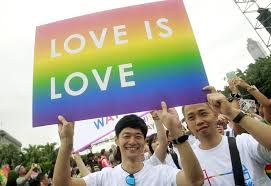
apnews.com/6cbb895e746640149ef620e31e24470d(opens in a new tab)
I chose this picture because I think it speaks volumes about same-sex marriage. Love is love and people should not be ashamed to love someone. Taiwan recently passed a bill that legalized same-sex marriage. They are the first country in Asia to do this.
“The war cost Nigeria a great deal in terms of lives, money, and its image in the world. During the war, there were 100,000 military casualties and between 500,000 and two million civilians’ deaths from starvation.[5] It has been estimated that up to three million people may have died due to the conflict, most from hunger and disease.”
After reading parts 1 & 2 from “Under the Udala Trees” by Chinelo Okparanta, I was interested in seeing the number of casualties from this war. I expected to see a large number of casualties, however I didn’t expect to see the number TWO MILLION. I think it is important to realize that these people died from starvation, meaning they were deprived of any resources to help them survive. I find it interesting that this article mentioned Nigeria’s “image in the world.” This war not only changed the people’s lives that lived there, but it changed the way the world views them. I cannot image what it was like for the civilians during this time, and how it affected the survivors.
https://www.newworldencyclopedia.org/entry/Nigerian_Civil_War

This picture shows the amount of women that are forced to engage in sexual acts before they turn 18. Although these statistics are from 2005-2016, I believe it is important to see how different areas of the world are affected by sexual violence. These women are victims; and this crime happened to them while they were still minors. I think it’s important to realize that these women were 18-29 years old when they reported what happened to them. Even though they eventually reported it, they had to deal , and probably are still dealing, with the consequences that this experience put them through. After looking at this chart, it makes me wonder how many women still haven’t reported what happened to them, and how the numbers would differ if all women had reported this violence.
https://ourworldindata.org/violence-against-rights-for-children
I attended the Phoenix Reading Series by Elizabeth Bradfield on January 23, in the Wilson School of Commerce in the Ballroom. The young lady that introduced her, read her own piece called “Pie Safe.” After Elizabeth Bradfield was introduced, she started reading from “Toward Antarctica.” She had previously written poems about Antarctica but she had never actually been. She ended up doing two contracts, which is equivalent to three months, that concluded her trips. After her trips, she has begun writing about her own experiences. One of her comments really stuck out to me, which was that she was told to purchase a dress and heels in order to work on the boat. I immediately related it to our class discussion about women’s attire and how women can be just as powerful in pants and a shirt as they can be in a dress and heels. This statement infuriated me because she is literally working on boat that is traveling to Antarctica in the freezing temperatures. I’m sure the boat had heat, but she had to pack a completely different outfit just to satisfy her employer.
Bradfield openly stated that she was a naturalist, meaning that she loved being outside, seeing different types of species, and anything dealing with the history of nature. In one of her pieces about a glacier, she talks about “being used how I actually want to be used” and I’m not quite sure what she meant by this quote since she was talking about a glacier; however, when she said that, it immediately made me think of the evolution of women. This is because women haven’t always had a choice in how they are treated or what they do, but over time women’s rights have evolved to be better than what they used to be. They have begun to have a choice in what they want to do and how they do it.
Antarctica is not meant to be a home for humans because of the harsh weather conditions. Currently, no humans reside in Antarctica, however, “1,000 to 5,000 people live there throughout the year doing research in the science stations.” The species in Antarctica can be vulnerable to these travelers. One specific animal she mentioned, were penguins and how they can contract diseases from the travelers. However, humans haven’t been the only invasive species in Antarctica; for example, reindeer had to be removed because they were causing to much damage to the continent.
She made a crucial, subtle comment, “the guy that is about to get his last continent.” I believe that she was trying to get the idea across that only men have ever conquered new lands and that it is going to be the same for Antarctica. This creates the idea that women are incapable of conquering new lands.
While reading her poem “Elephant Island” she stated that she often uses a lot of footnotes in her poems because she thinks it’s very important to explain the stories behind her stories. This relates to our class because we are experiencing how women write and why they write they write that way.
All of her poems relate back to this class because they are all about global issues that are happening right in front of her eyes. While working on the ship, she dealt with people from all around the world. This allowed her to experience different cultures and relate it back to her own life.
She mentioned how all penguins look the same, meaning you can’t tell a male penguin from a female penguin; so they all share the same duties. This comment made me think about how penguins have gender equality, yet in the United States, and many other places globally, women haven’t come close to experiencing anything of this nature. Lastly, this allowed me more exposure from a female author.
http://worldpopulationreview.com/continents/antarctica-population/
The quote shows how women are getting paid less than men when they are playing the exact same sport. In the case, the women’s team is has won THREE World Cup championships and FOUR Olympic championships; and they are still getting paid less than the mens team, that is not nearly as successful. Women are putting in the same, if not more, amount of time and effort as the men and yet they are still getting paid less. This relates to the Roxane Gay quote that we discussed in class because women have to continue to fight for their right of equality.

 My 3298 Blog